

May 12, 2026
The email platform your marketing team loves may be the wrong tool for alumni relations. When a platform is built for e-commerce, every feature your team does not need creates friction that slowly erodes your ability to do the work that matters. Here is what alumni communicators actually need, and how to know when it is time to switch.
In this post
1. The Menu Problem: Why Over-Featured Tools Slow You Down
When an alumni relations team logs into a platform built for e-commerce marketers, they are met with shopping cart integrations, lead scoring tools, and conversion funnels built for sales teams. Those features create friction every time you open the platform. Over time, that friction gets in the way of your ability to focus on the work that actually matters: building long-term relationships with graduates.
Mark Inglis, Alumni Relations Development Officer at Cape Breton University, calls it the “menu theory”.
“Walk into a restaurant with 400 items on the menu, and you spend 45 minutes second-guessing yourself. By the time the food arrives, the experience has already suffered. Not because the food is bad, but because the options got in the way.”
Alumni relations is not about selling a product. It is about sustaining a relationship between graduates and the institution they came from. A tool loaded with features you will never use does not sit quietly in the background. It pulls your attention, slows your workflow, and makes every task harder than it needs to be.
For a closer look at how CBU evaluated their options and made the switch, read the full Cape Breton University case study here.
2. What Alumni Communicators Actually Need
During an Envoke Insider Session, Mark outlined the four capabilities that genuinely moved the needle for his team at CBU. Across all of our post-secondary customers, these same four needs come up most consistently.
Segmentation
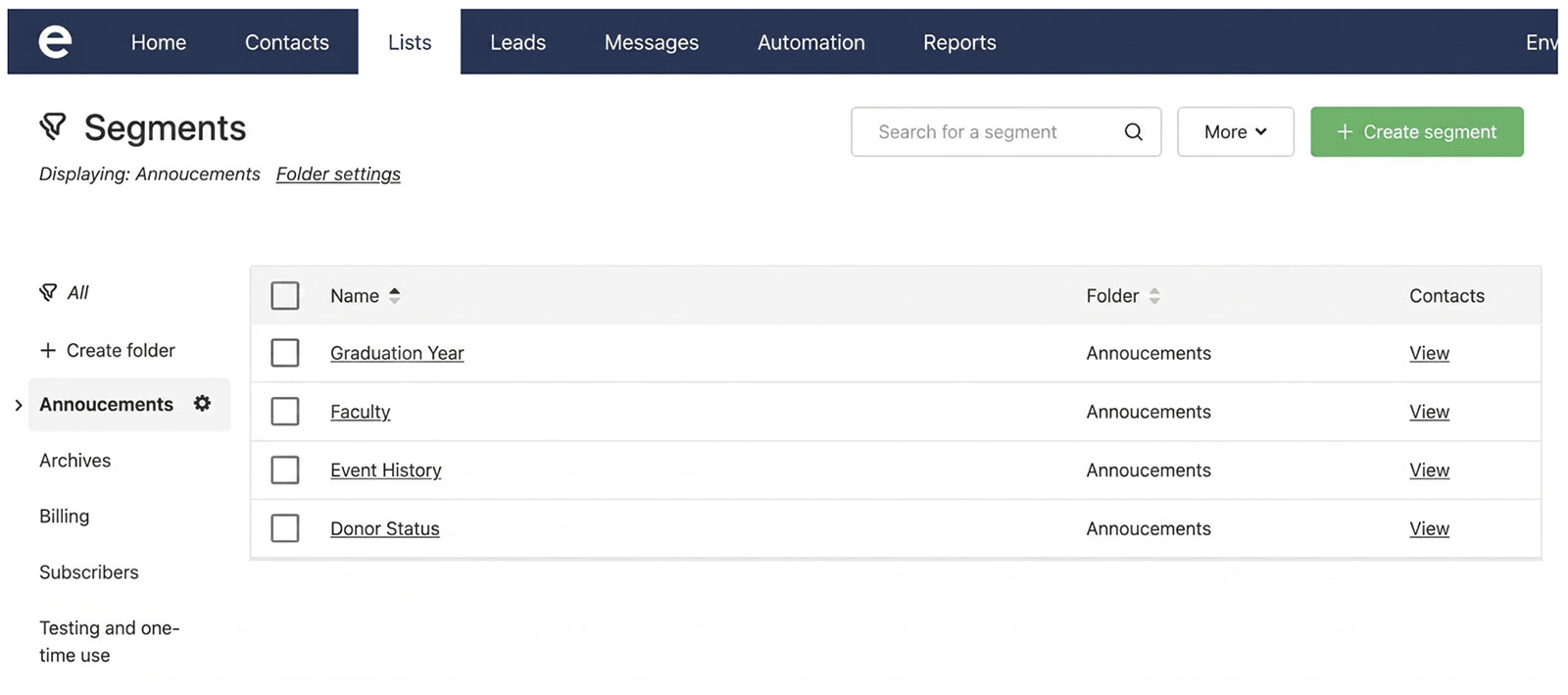
The ability to reach specific groups of alumni by program, graduation year, event history, or donor status, and to speak to them by name with context that is relevant to their experience, is the foundation of effective alumni communications. Generic broadcast emails do not build relationships. Targeted, relevant messages do.
Reporting clarity
Being able to report to senior leadership that the alumni magazine hit a 43% open rate, that a specific story was the most clicked, that most open’s happened on mobile: that is how you make the case for your program’s value internally. Dashboards that require an analyst to interpret are not useful. Clear, shareable reports are.
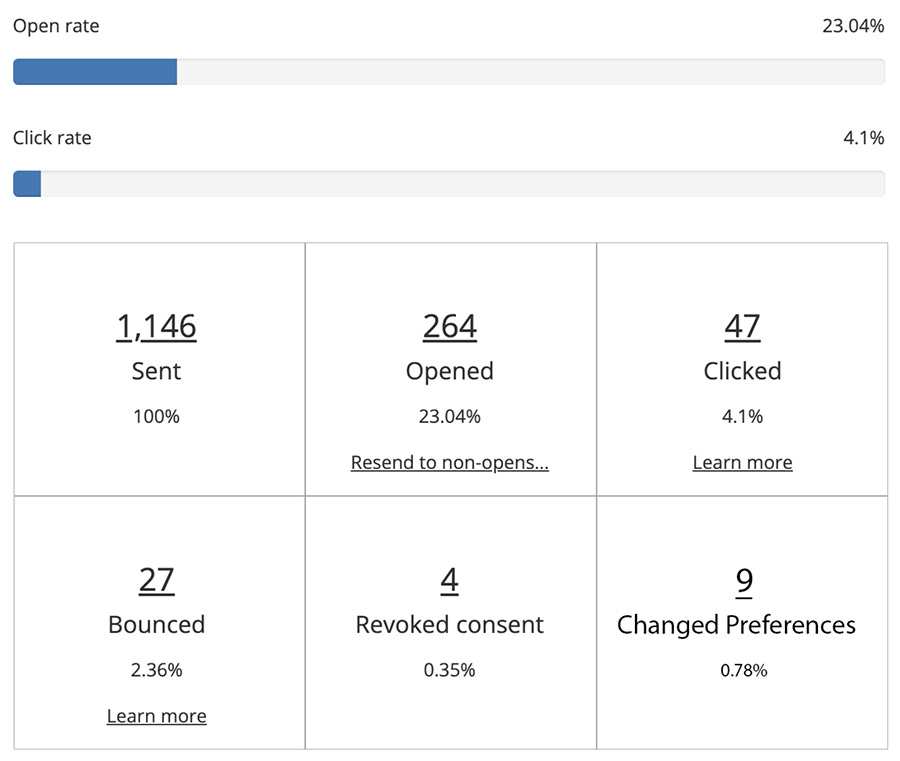
Industry benchmarks for marketing platforms often place average email open rates around 20–25%. In higher education, alumni communications can exceed those benchmarks when messages are well-targeted and relevant—making segmentation and timing critical to performance.
Canadian data hosting
For Canadian post-secondary institutions, this is not a nice-to-have. It is a regulatory requirement. Under PIPEDA, Canada’s Personal Information Protection and Electronic Documents Act, organizations are responsible for the personal information they collect, including where it is stored and how it is protected. As Mark put it: “When I started looking into Canadian solutions, Envoke was the only one that stood out.”
What Mark describes isn’t unique to CBU. Across Envoke’s post-secondary customers, the teams that get the most out of their communications platform are almost always the ones who stopped trying to use a marketing tool for a relationship-building job. The capabilities they ask about most consistently are the same four Mark named: segmentation, re-engagement sequencing, clear reporting, and compliant data hosting.
3. The Switch Is Easier Than You Think
One of the most common reasons alumni teams stay with tools that aren’t serving them is fear of migration. The assumption is that moving lists, rebuilding templates, and retraining staff will take months.
Mark’s experience at CBU was the opposite. List migration was straightforward. The platform’s existing templates got CBU up and running quickly, and their marketing communications team built out branded templates from there. Mark has since trained five or six colleagues to use the platform independently, without needing technical support for routine tasks.
4. Questions Worth Asking Before You Switch
If you are evaluating platforms, these are the questions that matter. If the answers are not clear from a demo, that is a signal in itself.
- Does the platform make segmentation easy, or does it require technical support every time?
- Does it strip out the features you’ll never use so you can focus on the ones you will?
- Are the reporting dashboards something you can actually share with leadership?
- Where is your data hosted, and does it meet your institution’s compliance requirements under PIPEDA?
- Can your full team use it independently, or does it bottleneck at one person?
5. The Right Tool Gets Out of Your Way
The goal of any communications platform should be to make it easier for you to do your actual job, not to introduce new complexity that pulls your focus from the work that matters.
For alumni relations professionals, that work is building genuine, lasting relationships with graduates. The right tool is the one that supports that mission directly, with clear segmentation, straightforward reporting, automated re-engagement, and compliant data storage.
Related Articles:
About the Author
Zoltan Wagner is a Product Manager at Envoke with over 15 years of experience in product development, specializing in email marketing technology and leading iterative improvements that enhance platform usability and performance.